
Dakota County Release Records Explained
A Dakota County jail release ends one booking episode. It does not always mean the person is free of every form of custody or court control. The Dakota County Jail may release someone on cash bail, a surety bond, an order for release without bail, completion of a local sentence, or a court order. Staff may instead transfer the person to the Minnesota Department of Corrections, another jail, the United States Marshals Service, or immigration custody. The destination is as important as the time.
The county’s jail search answers a narrow question: who is displayed as currently in custody. Once a person leaves that status, the name drops away. A past Dakota County release must then be checked through Minnesota VINE, the court register, a Sheriff’s Office data request, or another system that received the person. For a state-prison case, “released” often means prison confinement ended while supervised release began. Final discharge is a later and different event.
- Release
- The end of a specific custody episode, including a community exit or agency transfer.
- Discharge
- The end of a sentence, probation term, or corrections jurisdiction.
- Time served
- Custody credited as satisfying all or part of a jail term.
- Detainer
- A request or order that may keep a person held for another authority.
Dakota County Release Types
Release language should be read in context. A bail release leaves the criminal case pending. A transfer ends Dakota County custody but starts or continues custody elsewhere. A court dismissal can supply release authority, while the physical exit may happen later after the jail completes identity, warrant, and paperwork checks.
| Release type | Meaning | Next record |
|---|---|---|
| Cash bail, bond, or recognizance | The person leaves jail while the case continues. | Dakota County court register and jail release record |
| Time served or sentence end | The local custodial term ended. | Sentence, custody-credit entry, and actual release transaction |
| Court-ordered release | The jail acts on an order from the court. | MCRO register and the release authorization |
| Transfer or board-out | The person leaves this jail for another facility or agency. | Receiving jail, MN DOC, BOP, ICE, or federal court source |
| DOC supervised release | Prison confinement ended, but state jurisdiction continues. | MN DOC Locator and Minnesota Haven |
| Final discharge | The sentence or DOC jurisdiction ended. | DOC data request and sentencing case |
Escape and death are custody-status changes, not ordinary releases. They should never be described with softer release language. A precise search matches the system’s own term and uses the record tied to that event.
Dakota County Release Record Fields
A focused release record should identify the person, the booking, the authority for departure, and what happened next. The Dakota County Sheriff’s Custody Manual states that release authorization is retained in the inmate record file. Not every internal field is public. Medical, victim, juvenile, security, active-investigation, and other protected data may be withheld or redacted under Minnesota law.
| Field | What it can establish |
|---|---|
| Name and booking number | The custody episode to which the record belongs |
| Admission date and arresting agency | When the booking began and which agency brought the person in |
| Public charge, hold, and bail data | Why custody continued and whether another authority had an interest |
| Release date and time | When staff completed the physical release transaction |
| Release type and authority | Whether bail, sentence completion, a court order, or another basis controlled |
| Destination or receiving agency | Whether the exit was to the community or another custody system |
| Booking photograph | The identification image tied to the arrest, subject to lawful exceptions |
A name by itself is weak proof. Match a booking number, court file, offender number, booking date, and other lawful identifiers. The county warns that people may use false identification and that fingerprints are the way to confirm true identity.
Request Dakota County Release Data
The formal fallback is the Dakota County Data Practices process and its online Public Data Request form. A request should describe the booking and fields sought. It should not ask staff to conclude that someone was “free.” Ask for the recorded release type or destination so a transfer is not mistaken for a community release.
- Identify the full name, approximate booking or release range, and any known booking or court number.
- Ask for public booking data, the actual release date and time, release type, destination or receiving agency, and release authorization to the extent public.
- State whether inspection, electronic copies, or both are requested. Minnesota law makes inspection of public data available without a viewing charge.
- Ask the Records Unit to cite the legal basis for a withheld field and provide any separable public part.
- Compare the response with the court register and the relevant custody system before drawing a conclusion.
Law Enforcement Center
1580 Highway 55
Hastings, MN 55033-2343
DCSOrecords@co.dakota.mn.us
Jail Information: 651-438-4800
Sheriff: 651-438-4700
The county publishes no guaranteed response time or general per-page copy price in the research used for this resource. Its paid daily jail booking report is not documented as a release list. Do not assume that report contains release times or photos.
Minnesota Release Record Law
Minnesota Statutes section 13.03 supplies the general right to inspect and obtain copies of public government data. It also allows lawful copy charges. The rule does not make the entire inmate file public. The responsible authority applies each data classification and separates public material when feasible.
Section 13.82 governs law-enforcement data. Subdivision 26 generally makes a booking photograph public, with a temporary exception when access would harm an active investigation. Section 13.85 protects specified corrections and detention data. Juvenile, victim, sealed, expunged, medical, and security information can require more limits.
Expungement seals qualifying court records from public view. It does not mean every government record was destroyed or every past publication must vanish.
The Minnesota Judicial Branch explains petition and automatic-sealing routes. Waiting periods for some petition cases run from discharge of the sentence. Eligibility depends on the disposition, offense, later convictions, and current statutes, so the actual court order controls access.
Find Dakota County Released Inmates
Start with the last known custody system. The Dakota County jail search can show that a person remains in the jail, but its failure to show a name does not prove release. A confirmed path combines a custody event, legal authority, and the physical release record.
- Check the current Dakota County Jail search once. Treat a no-result as unresolved.
- Search Minnesota VINE for a county-jail custody change and match the result to the right person.
- Open MCRO and review the Dakota County criminal case for bail, release orders, sentence terms, custody credit, warrants, and disposition.
- For a prison case, use the MN DOC Locator. For a federal sentence, use BOP. For possible immigration custody, use ICE.
- Request the Dakota County release transaction when the online sources do not show the actual time, type, or destination.
A person who disappears from the Dakota County roster may have left the community, transferred, used another name, or been affected by a data change.
The Dakota County 24-hour release page explains the same-day fallback because the Sheriff does not publish a rolling release feed. A court order proves authority. VINE reports a custody event. The jail transaction is the best source for the actual processing time.
Dakota County DOC Release Search
The Minnesota DOC Locator covers people committed to the Commissioner of Corrections who remain under DOC jurisdiction. That includes people still in prison and people released from prison to supervision. It does not cover everyone who spent time only in the Dakota County Jail, and it may stop returning someone after final discharge.
| Search item or field | How to read it |
|---|---|
| Six-digit MNDOC Offender ID | The strongest search key when known |
| Name and alias history | The record may display the current DOC name rather than the name searched |
| Status | “Under Supervision as of” signals release from prison with DOC jurisdiction still active |
| Anticipated Release Date | The current estimate for a state-prison case, not a guaranteed appointment |
| Expiration date | A separate sentence endpoint that should not be confused with prison release |
| Agent or office | The public supervision contact when displayed |
The official locator image demonstrates the live search and release-date record used for Minnesota cases.
Open the Minnesota DOC Locator source before viewing the captured interface.
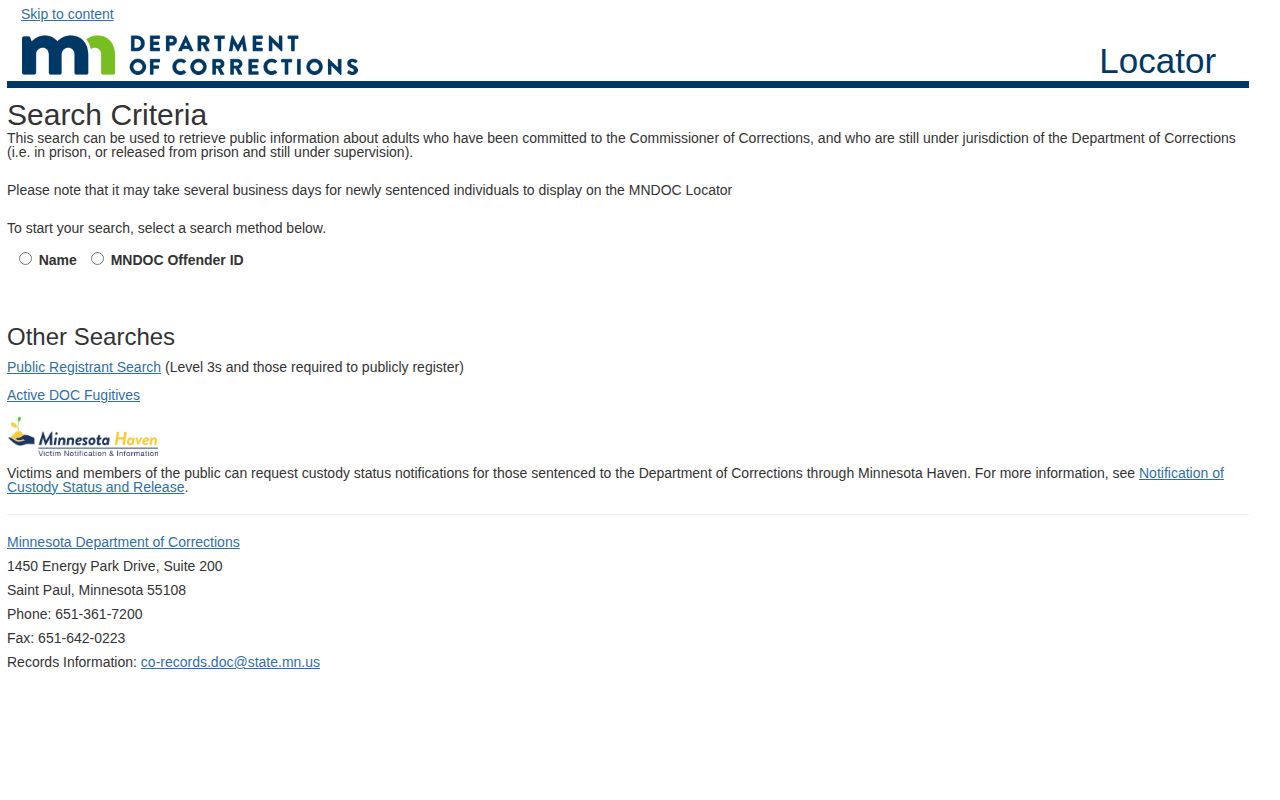
The screen’s live labels should govern any search. A state record is not proof of a Dakota County jail-only release.
Dakota County Release Search Routes
Different systems answer different parts of a release. The county roster is current only. MCRO keeps the judicial trail. VINE reports county-jail custody events. Minnesota Haven handles state-prison notifications. BOP covers federal prisoners in its searchable period, while ICE focuses on current immigration detention.
| Situation | Best first source | What confirms release |
|---|---|---|
| Still in Dakota County Jail | County jail search | Current-custody display |
| Past Dakota County booking | VINE and MCRO | Sheriff release transaction |
| Minnesota prison release | MN DOC Locator | Status, date fields, and DOC record |
| Federal sentence | BOP Inmate Locator | Released status/date and PACER docket |
| Possible ICE transfer | ICE Detainee Locator | County destination field and ICE contact |
| Unknown custody type | MCRO case search | Order, sentence, and named receiving authority |
A no-result has limits in every system. Final discharge can remove a person from an active-jurisdiction locator. A spelling difference can hide a match. Feed timing can delay an update. Use exact identifiers and note when each search was run.
When Dakota County Jail Releases Occur
Dakota County says most jail releases occur at about 5 a.m. unless a court order sets a different time. The local detail is useful, but it is not a guaranteed pickup appointment. The Custody Manual describes staggered out-times, an escort to the transfer and release area, and limits on movement during counts, shift changes, unsafe conditions, or disruption.
Before release, staff compare identity with the intake name, photograph, and facility number. They verify the order or sentence authority, good-time adjustments, and any warrant or detention order. Staff then sign and date the release paperwork on the day of release. Each check can shift an estimate. In severe weather, the policy may allow a short wait in a public area or safe transport to the nearest safe place when reasonably practical. That is a safety measure, not a general ride service.
The county release page shows the published timing statement in the captured source.
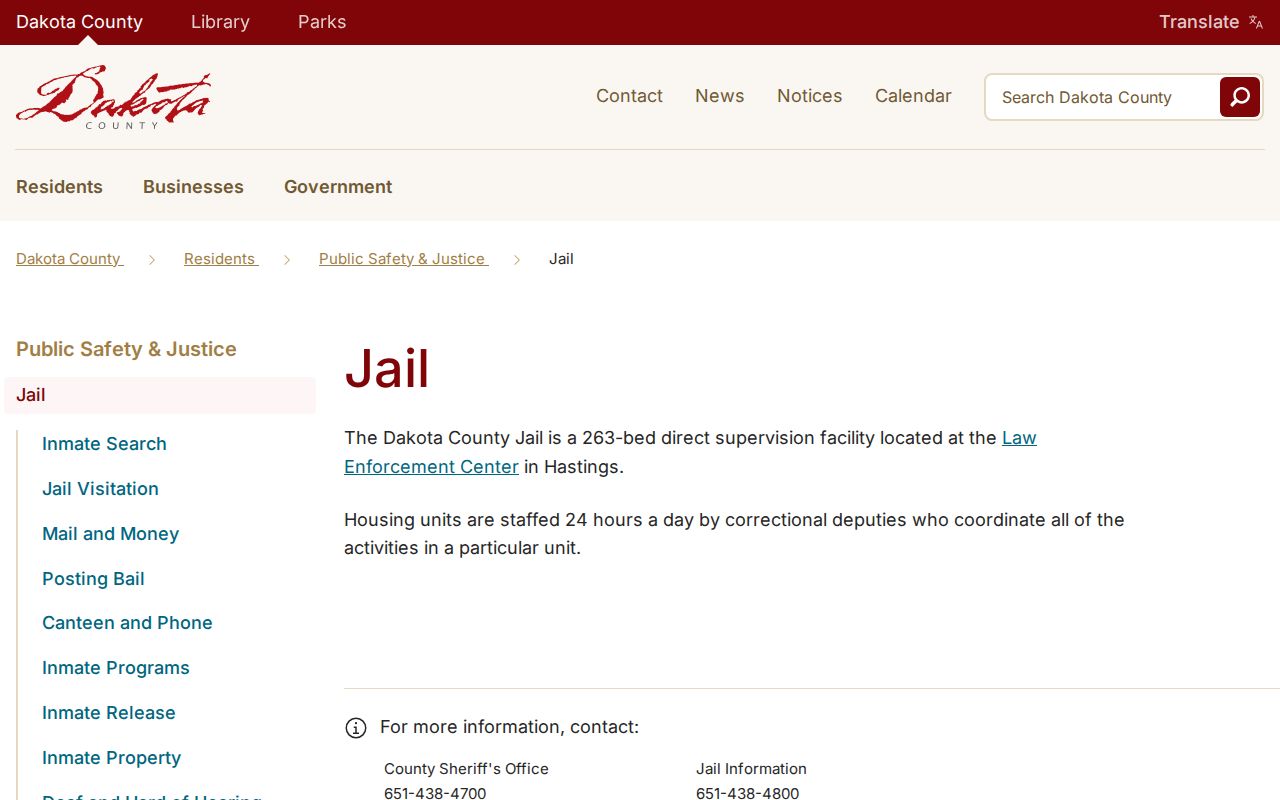
The official statement pairs a normal processing time with the warning that another facility controls releases for people boarded elsewhere.
Getting Home After Dakota County Release
Dakota County’s self-surrender instructions tell a person to bring contact information for the person who will provide a ride after release. A cellphone is held during booking and returned at release. Charging stations are available in the jail lobby. These details support a private pickup plan without implying that the county promises transportation.
No official general bus, taxi, rideshare, or family waiting-zone directions were found in the project research. Pickup plans should therefore come from direct contact with the person nearing release and the jail’s current instructions. A person serving a Dakota County sentence while housed elsewhere follows that other facility’s process, not the Hastings schedule.
Dakota County Bail Release Hours
Dakota County divides cash-bail payment by time and place. Dakota County District Court accepts cash bail on weekdays from 8 a.m. to 4:30 p.m. After 4:30 p.m., on weekends, and on holidays, the jail lobby accepts exact cash. A bonding agent is another route. Bail or bond must be posted before any ordered pretrial-program intake and release.
A bail release is not a case dismissal. The court register remains the source for the pending charges, conditions, hearing dates, and later disposition. The actual jail transaction provides the physical release time. This distinction prevents a bond entry from being reported as if the case ended.
Dakota County’s posting-bail page is the source for the local split shown below.
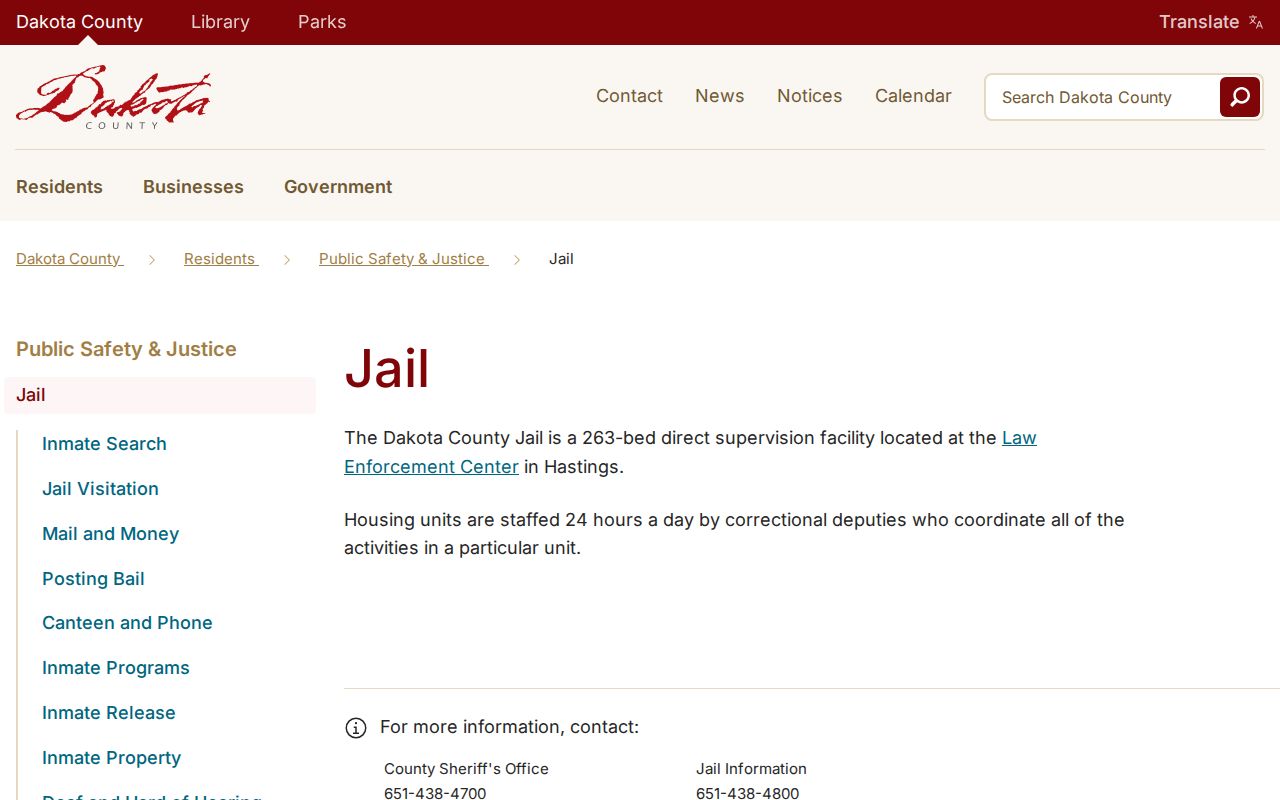
The captured county information identifies the payment channel, while the court file supplies the legal terms of release.
Dakota County Release Re-Entry Help
The Dakota County Re-Entry Assistance Program is an interdepartmental bridge for selected sentenced people leaving the county jail or returning from Minnesota state prison. County staff describe a request and interview process, a plan made before release, and transition contact that may continue for about 90 to 120 days afterward.
RAP is not a search or custody-verification service. It does not replace the Sheriff’s release record, the court case, or the DOC Locator. Its role begins with planning and navigation for selected participants. Dakota County Community Corrections also manages pretrial release supervision, probation, work release, electronic home monitoring, and other community programs, each with its own legal status.
Dakota County Property After Release
A person has 90 days after release to collect property left at the Dakota County Jail. A designee may pick it up only if that person was named on the property-release form completed before release and brings identification. The rule gives families a clear deadline but does not change the release record itself.
Confiscated property follows the arresting agency’s process. An impounded vehicle is handled through the arresting agency and impound lot. Those items should not be requested from jail property staff as if every item stayed with the booking. When an official record is wrong, send a documented accuracy challenge to the government unit that maintains it, identify the disputed data, provide support, and state the correction sought.
The Dakota County inmate-property page documents the deadline and designee rule pictured here.
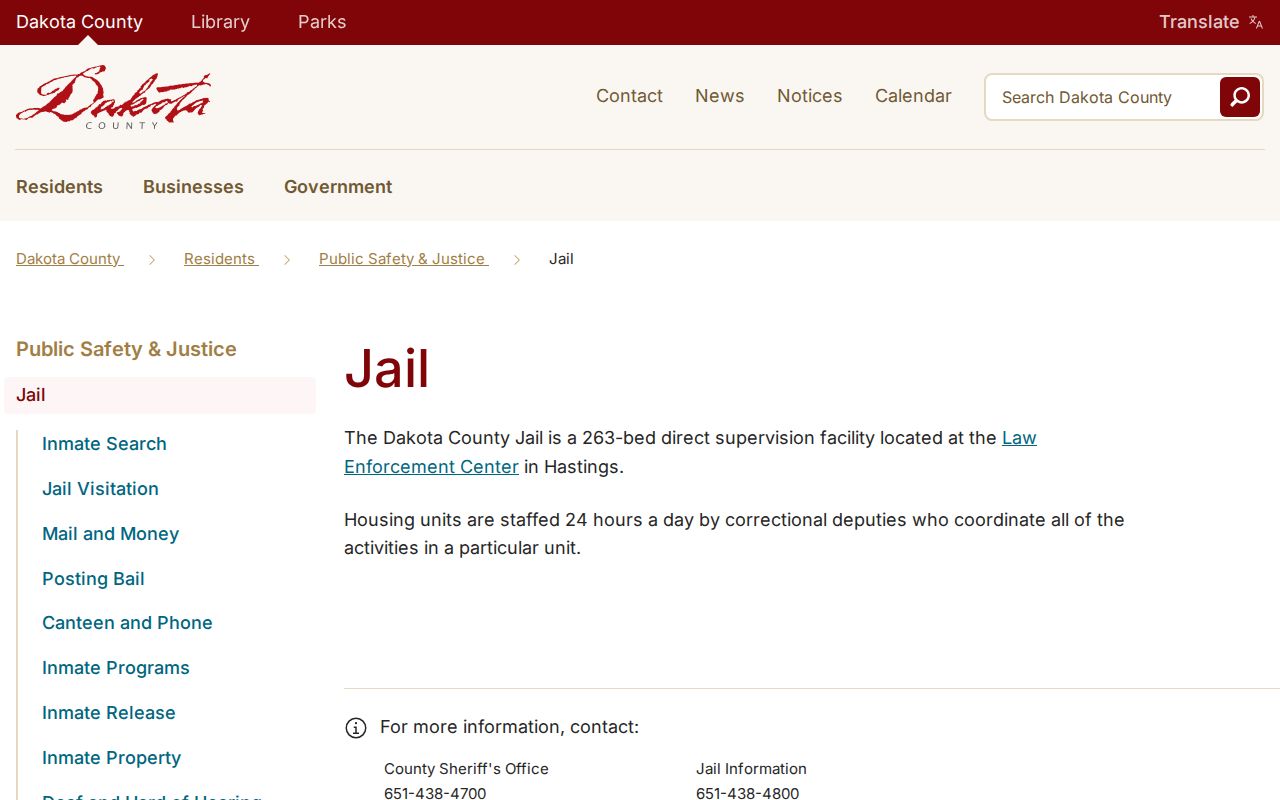
The source distinguishes jail property from items controlled by the arresting agency or an impound lot.
Dakota County Release Court Records
Dakota County has one District Court administration with public counters in Hastings, Apple Valley, and West St. Paul. MCRO provides remote registers of actions and many newer documents. Courthouse terminals and counters are the better route for older records or documents that cannot be downloaded remotely. That local structure matters when a release order is shown in the register but the PDF is unavailable.
Look for bail or release orders, a charge disposition, an executed or stayed sentence, custody credit, probation terms, warrants, revocation, and discharge. “Stayed execution” normally means confinement is not being carried out while conditions are met. “Probation discharged” ends probation, not a past jail booking. A warrant being quashed does not prove that jail staff booked or released the person.
MCRO’s official access page supplies the court search route shown in the project capture.
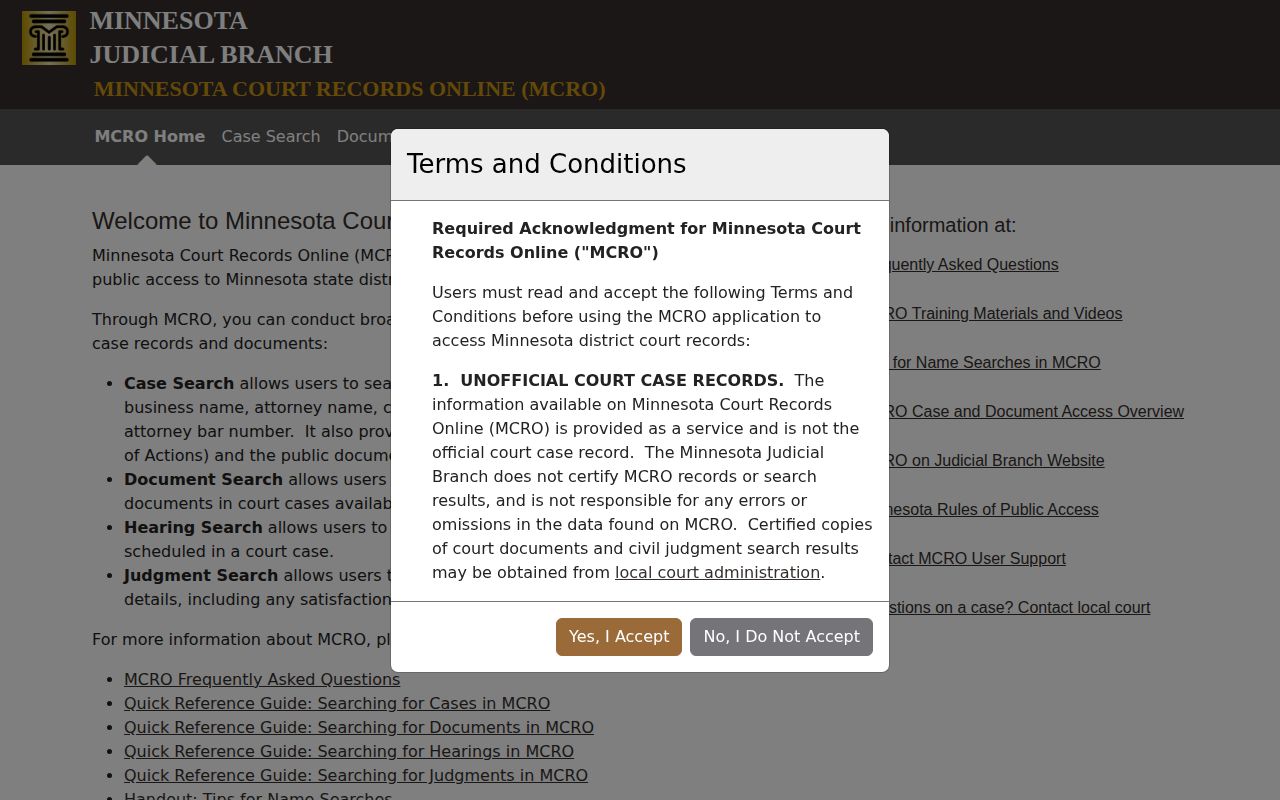
The court trail can explain authority and sentence terms, but the jail record remains the source for the minute physical processing ended.
Dakota County Release Facilities
The Dakota County Jail is the adult booking and detention facility in the Law Enforcement Center. Its current search stops displaying a person after custody ends. Community release, transfer, VINE, court, and Sheriff data-request routes all apply according to what happened.
The Dakota County Juvenile Services Center is a secure juvenile detention and treatment facility operated through Community Corrections. Juvenile custody and court data can be restricted, so the adult jail roster and public adult locators must not be offered as universal juvenile-release tools. Authorized family, counsel, court, facility, and notification channels control access.
No state prison, federal prison, or dedicated ICE detention center was identified within Dakota County. A Dakota County case can still lead to those systems elsewhere. The physical location does not change which statewide or federal locator answers the custody question.
Public Record Search
Sponsored Results